Hybrid artistic practice situated between materiality, digital transformation, and sculptural intervention.

My work explores care as an invisible structure that sustains bodies, relationships, and systems.

“Visibility

is already a form

of existence.”

Iconic Mammas

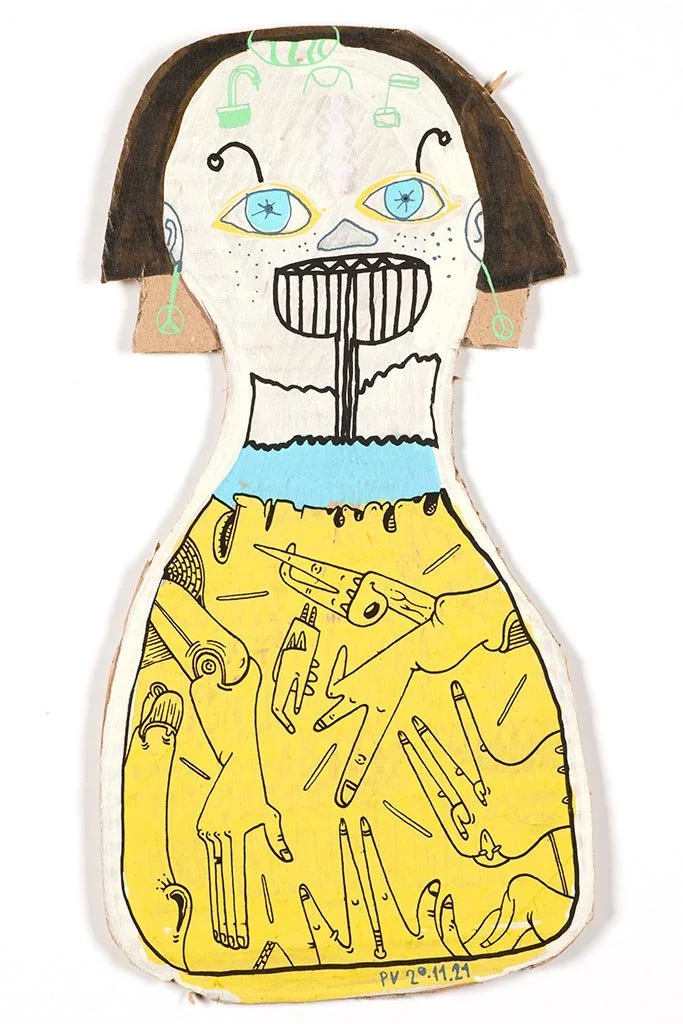
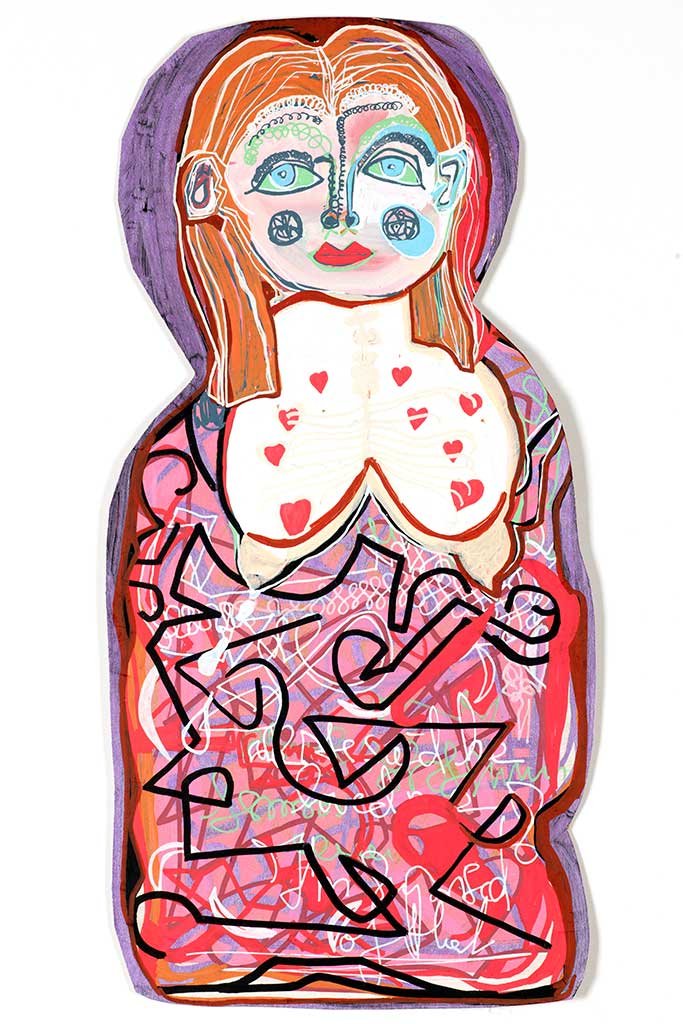
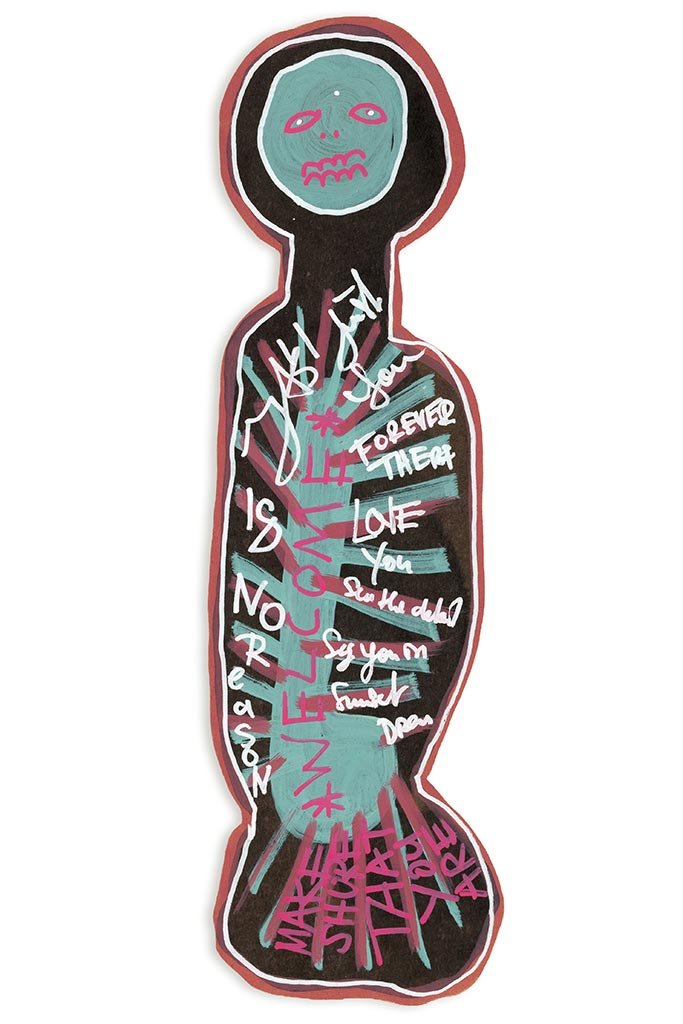
The Iconic Mammas series approaches motherhood as both an archaic and urgently contemporary motif: as the origin of life, as a practice of care, and as a quiet, often invisible force that sustains societies. In oversized, iconic figures, Suntje Sagerer translates this principle into a visual language that moves between painting, object, and digital sculpture.

The Mammas do not appear as individual portraits, but as archetypal image-bodies—reduced, powerful, and interwoven with ornamental structures. They stand for care as a social and existential attitude, independent of gender, origin, or identity. Each figure is unique, yet part of a growing collective system that makes visible global connections, cultural contexts, and shared responsibility.

At a time when care work is systematically devalued, the series establishes a deliberate counterpoint: it elevates care from the private sphere into the public and museum space. The Mammas become quiet monuments to another form of strength—one grounded not in power, but in attention and devotion.

As the work expands into spatial and digital contexts, Mobile Monuments of Care emerge: sculptural interventions that move between physical materiality and virtual displacement. They position the figure of care within political, economic, and historical spaces—and ask what happens when vulnerability encounters structures of power.

Iconic Mammas is therefore not only a body of work, but an open system: a visual archive of care—and an artistic assertion of connectedness in a fragmented present.

Ein Collage-Kunstwerk eines menschlichen Körpers mit einem Gesicht, das aus verschiedenen Materialien besteht, inklusive dunklem Haarschopf, blauen Augen, einer Nase, einem großen offenen Mund mit Zähnen, blauer Wasserlinie im Halsbereich, und einem gelben Kleid, das mit verschiedenen Strichzeichnungen von Händen und Schreibutensilien wie Stiften und Scheren bedeckt ist.
Eine bunte, abstrakte Zeichnung eines Mädchens mit langen roten Haaren, blauen Augen und rotem Lippen, das die Hände vor der Brust hält, mit einem Muster aus roten Herzen auf der Brust und einem Hintergrund voller Graffiti-ähnlicher Linien und Formen.
Streicheleinheit, Hände und eine vertikale Figur mit Texten in Weiß, Pink und Blau auf Schwarz, inspiriert von Street Art.

Cut Out Edition

High-quality cut-outs of the original Iconic Mammas are available in a limited edition in variable sizes.

ICONIC MAMMAS – PUBLIC SPACE

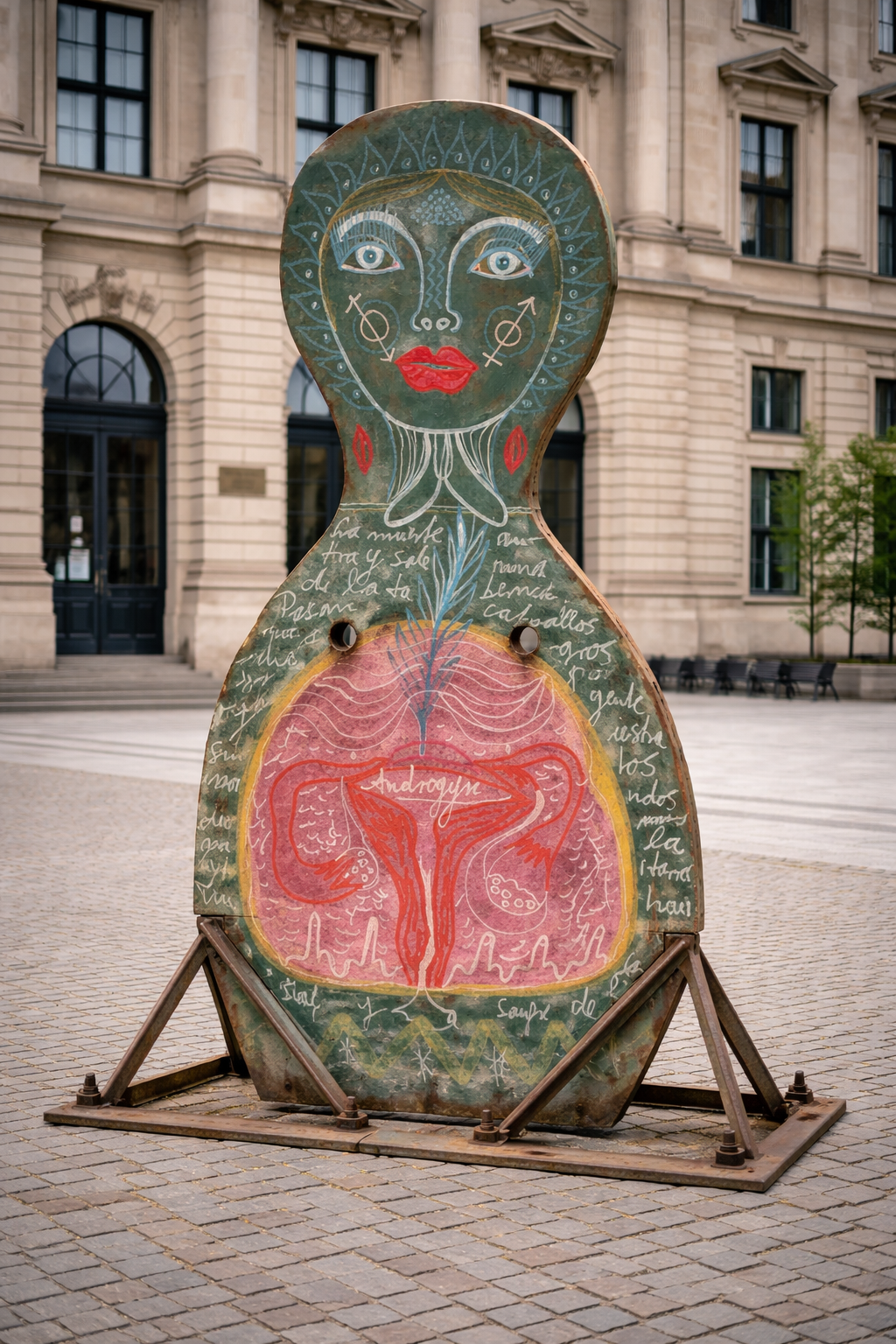
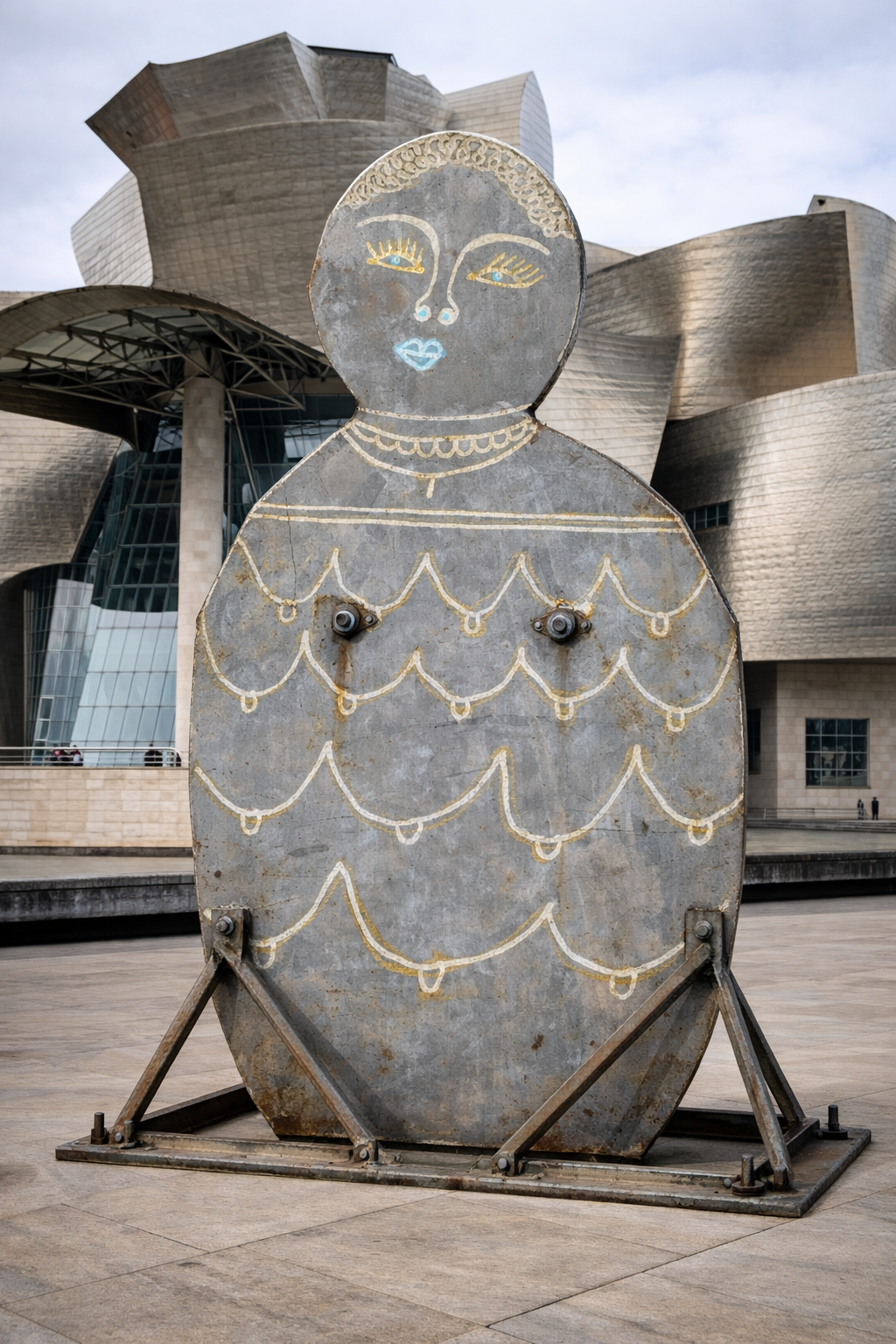
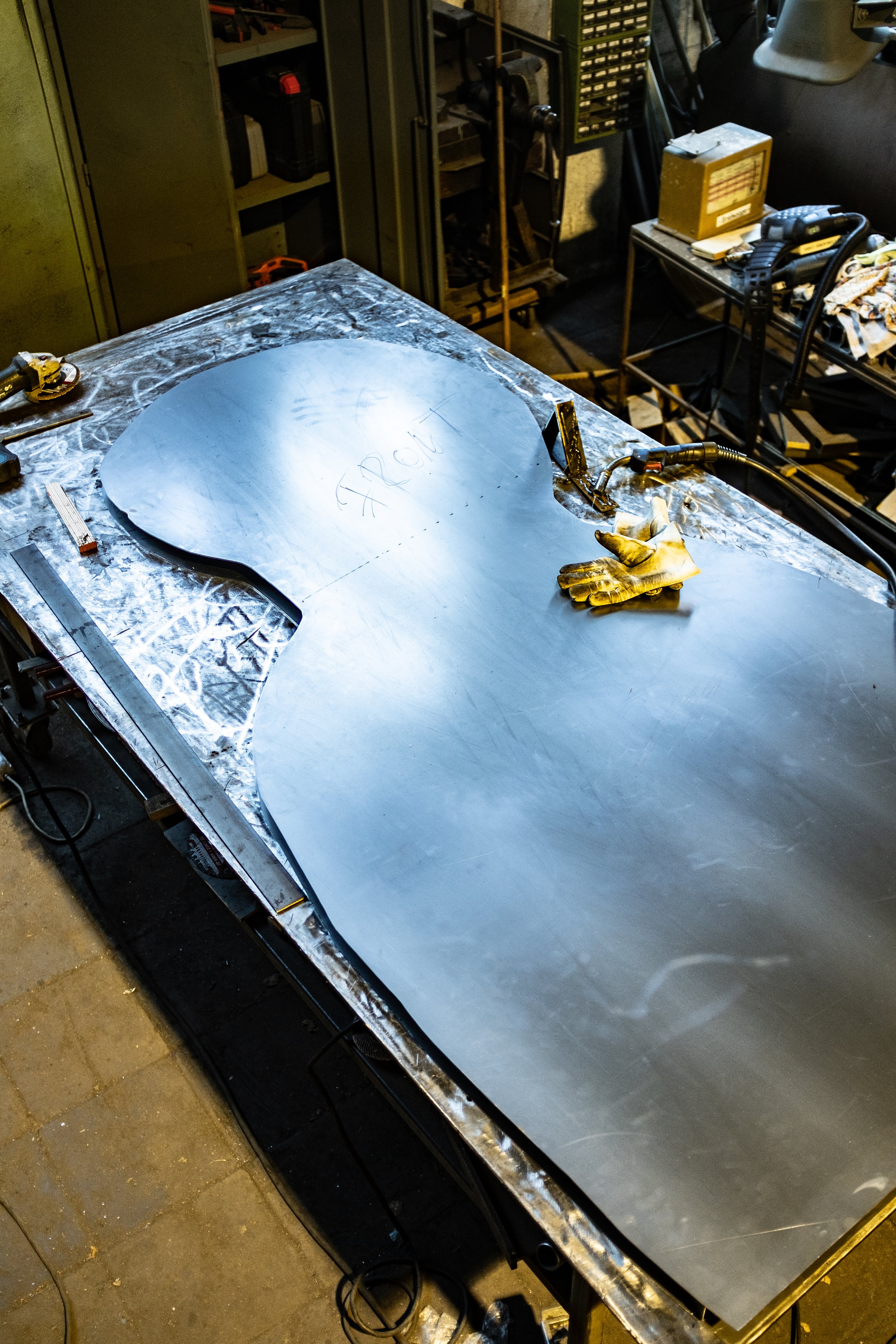
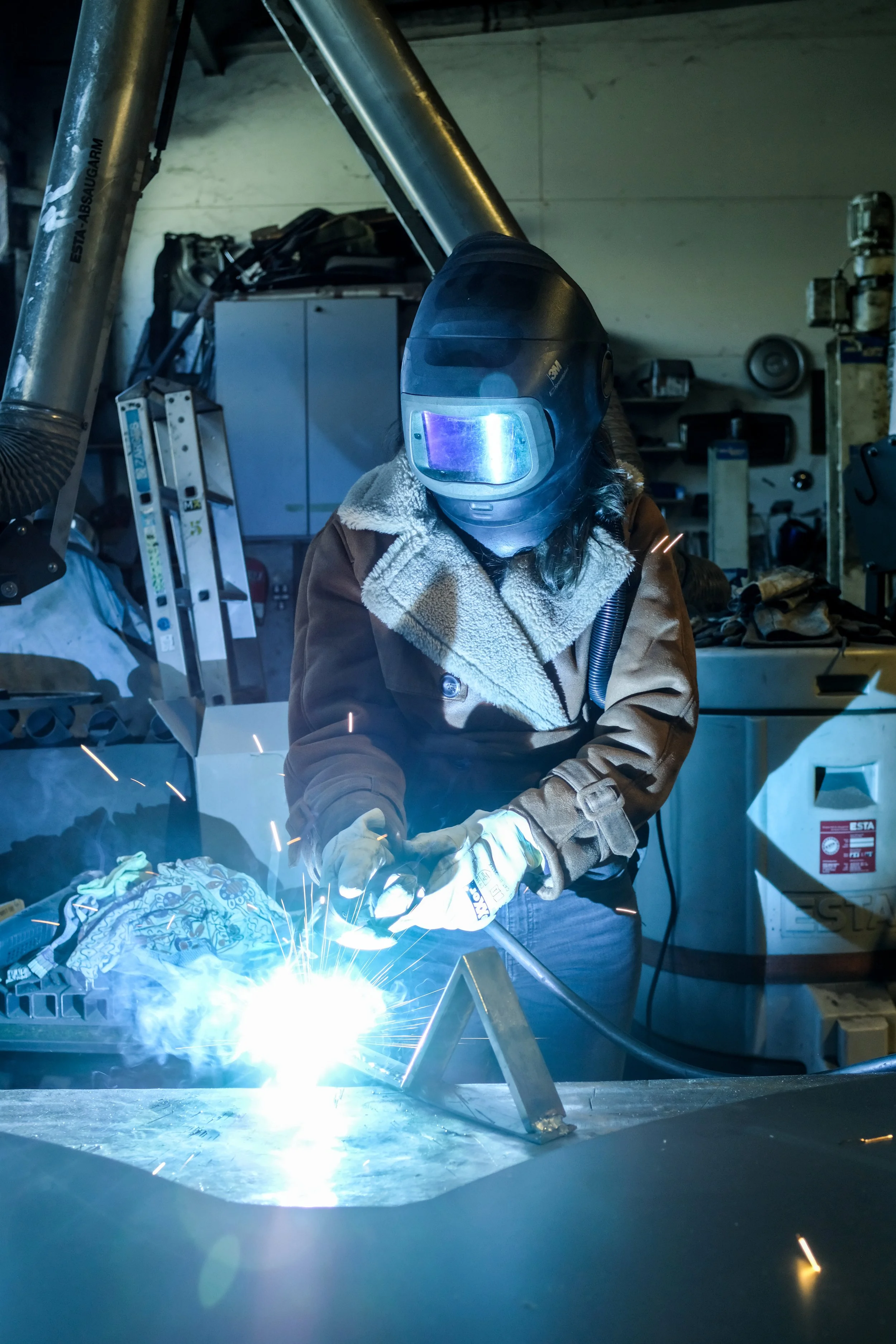
The iconic mother figure appears as a flat, industrial object within public space, anchored by a visible structural framework. As a large-scale metal sculpture, it asserts its presence in the urban environment—clear, reduced, and impossible to overlook.

The exposed construction refers to what remains largely invisible in society: the sustaining labour of care. Through their scale and placement, the Mammas resist the displacement of care into the private sphere. They make visible what holds collective systems together.

These sculptures understand motherhood as a political practice—an essential yet structurally marginalised force. By transferring care into public space, they demand attention, recognition, and new standards for what is valued within society.
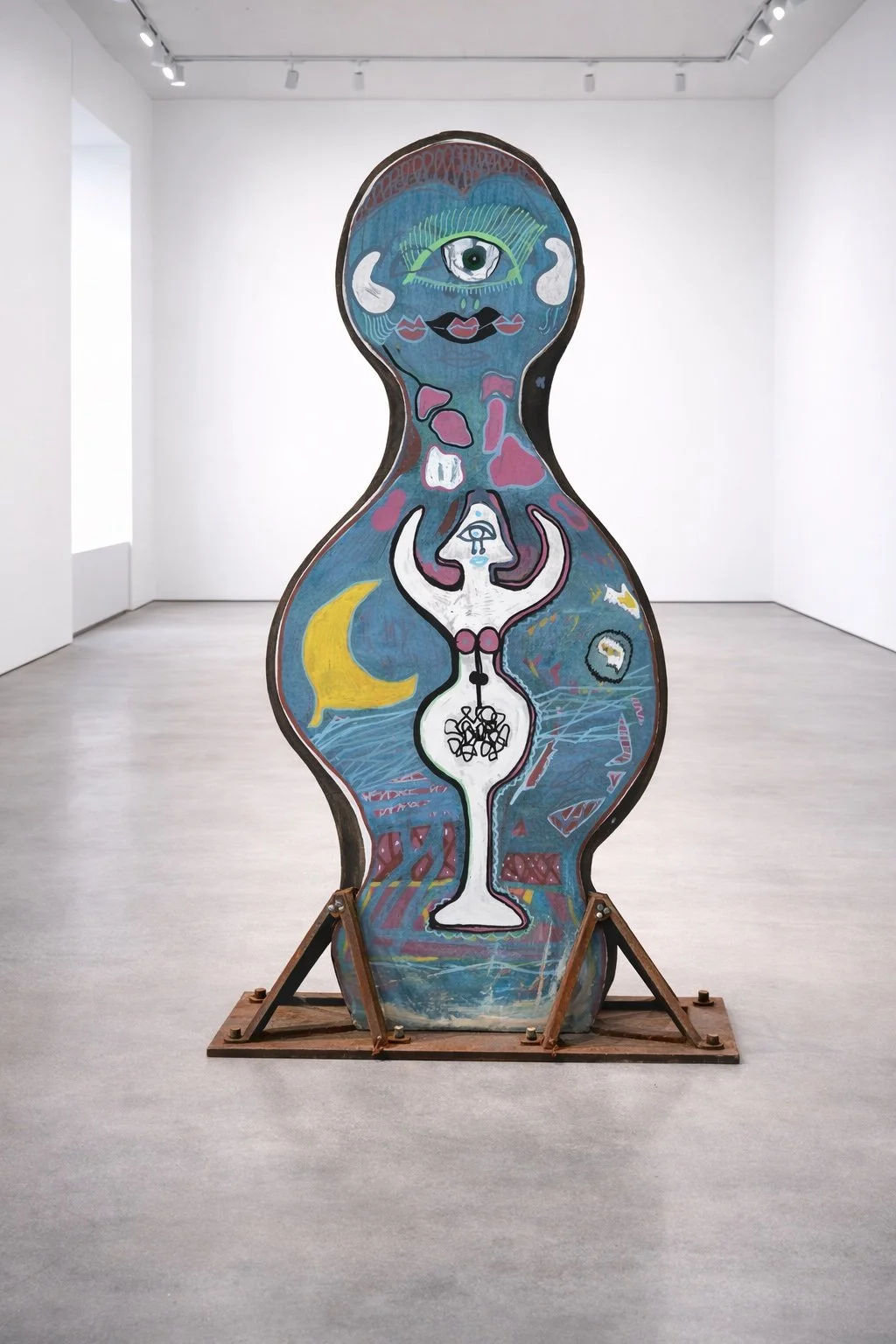
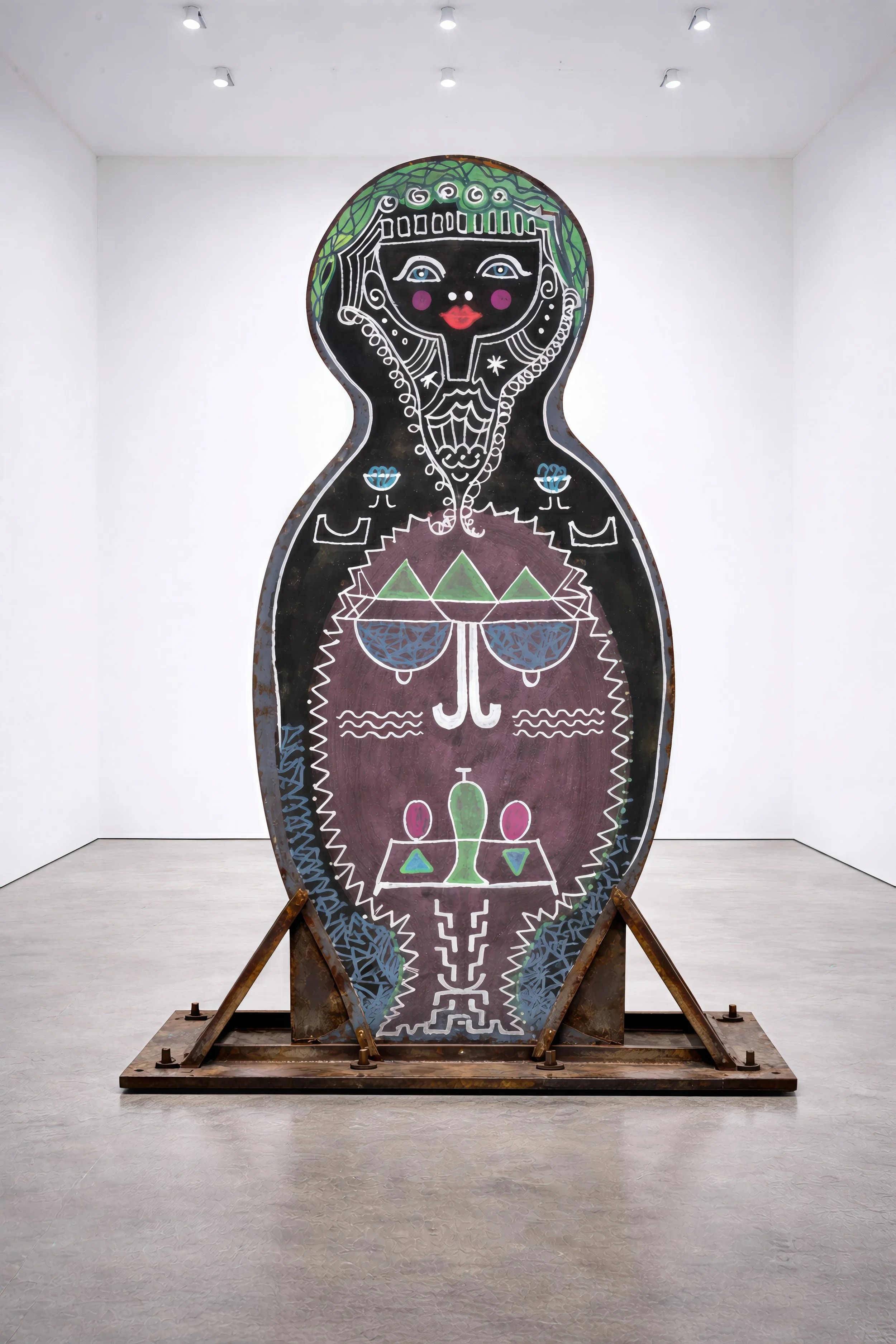
Kunstinstallation in Form eines menschlichen Körpers mit bunten, surrealen Symbolen und einem Auge auf dem Kopf, im Kunstmuseum gezeigt.
Kunstinstallation in Form eines umgedrehten weiblichen Körpers mit bunten, stilisierten Details, auf einem Metallrahmen.
Kunstinstallation in Form eines stilisierten weiblichen Körpers mit Darstellung des weiblichen Fortpflanzungssystems und einem Gesicht auf der Oberseite, auf öffentlichem Platz vor einem historischen Gebäude.
Metallskulptur einer stilisierten Figur mit weiblichen Zügen, kleiner runder Kopf, geschlossene Augen, blauer Lippen und dekorativen Elementen auf dem Körper, vor modernem Gebäudekomplex mit geschwungenen, glänzenden Fassaden.

Manifest of the Iconic Mammas – Public Space

We bring care into public space.
Not as a symbol, but as a body.

The Mammas are large.
They are visible.
They occupy space that has historically been denied to them.

We oppose the invisibility of care.
We oppose the idea that care is private, quiet, or secondary.

These sculptures are not decoration.
They are assertions.

Steel, surface, structure—laid bare.
Like the systems that depend on care while simultaneously concealing it.

Motherhood here is not a role.
It is a practice.
A political force that sustains society.

The Mammas stand in urban space
between architectures of power, flows of traffic, and economic zones.

They mark what is missing:
recognition.
time.
value.

MAG MINIMAL ART GALLERY

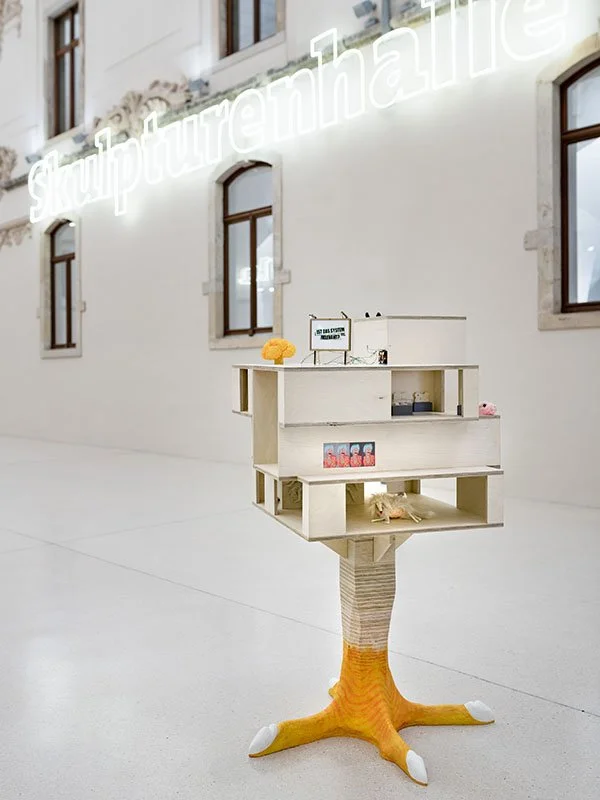
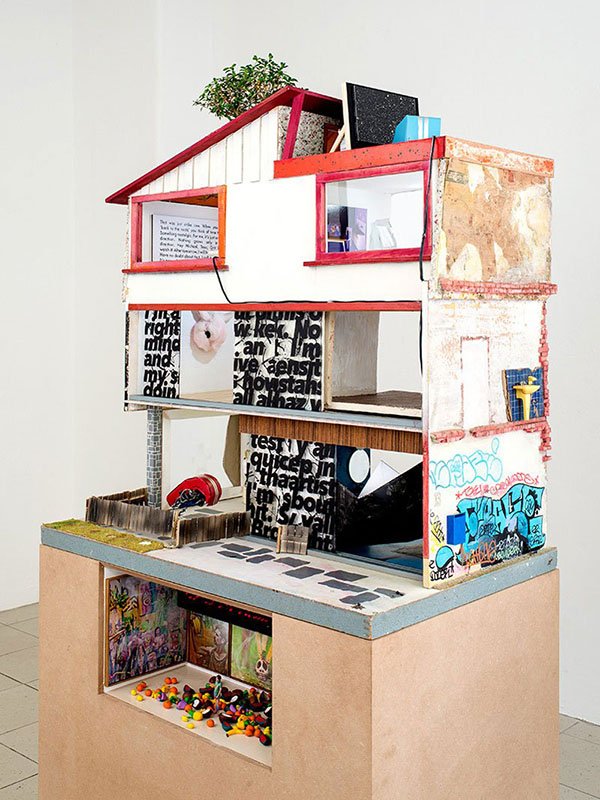
The MAG – Minimal Art Gallery emerged in 2014 from a shifting life situation: the simultaneous demands of motherhood and the desire to continue an active artistic practice. From this tension, a format developed that works with condensation, reduction, and spatial precision. Today, the MAG brings together more than 88 regional and international artists within sculptural miniature environments.

I understand each MAG as a social sculpture—a condensed network of artistic positions, materials, and perspectives. The miniature scale does not limit focus; it sharpens it. It creates a concentrated field in which painting, photography, video, object, and installation enter into new spatial dialogues.

My role moves between artist, spatial architect, and curator. The MAG is less an exhibition than an ongoing process: a precisely composed resonant space that shifts with every new constellation of works—and simultaneously expands and challenges my own artistic practice.

MAG Mothers INN
GIF Vienna

MAG Reloaded
Galerie Baer Dresden
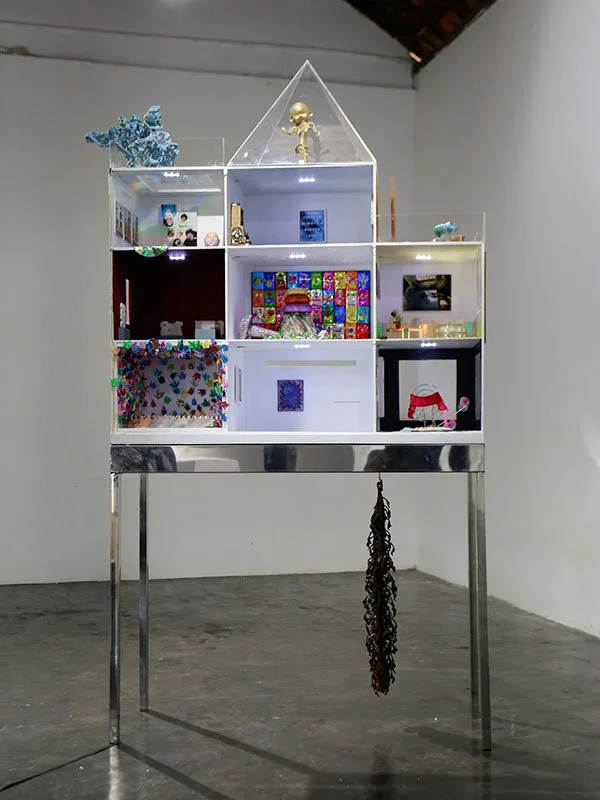
Ein kunstvolles Diorama eines Miniaturhauses auf einem metallnen Tisch, mit verschiedenen kleinen, detaillierten Szenen und Objekten in den Zimmern, beleuchtet durch kleine LED-Lichter.
Kunstinstallation in einem hellen Raum mit großen Fenstern und der Beschriftung 'Skulpturenausstellung' an der Wand.

MAG Home
REDBASE Foundation Yogyakarta

MAG Gunst der Stunde
Albertinum Museum Dresden

MAG Reloaded
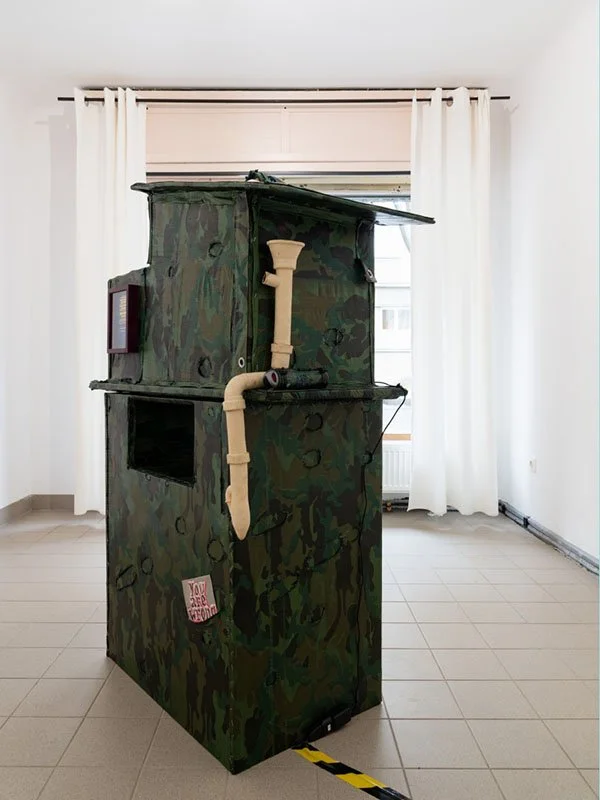
Ein selbstgebauter Zeltbereich im Zimmer, der mit Camouflage-Muster bemalt ist, inklusive einer kleinen Öffnung und einem Schlauch, der wie ein Abzug aussieht.

Previously exhibited artists of MAG

Alvin Agnuba, Sophie Altmann, Marleen Andreev, Grit Aulitzky, Lisa Maria Bailer, Nadine Baldow, Klaus Beckmann, Christi Birchfield, Jan Brokof, Dominik Bucher, Stefanie Busch, Ayeleen Cocoz, Constanze Deutsch, Nicolas Dupont, Taufik Ermas, Franziska Fennert, Tony Franz, Lucie Freynhagen, Rao Fu, Dita Gambiro, Amac Garbe, Rosie Gibbens, Peter Haas, Tesa Hammerstedt-Grünberg, Sebastian Hempel, Nora Hermann, Olaf Holzapfel, Martin Honert, Tilmann Hornig, Katrin Huber, Noor Ibrahim, Maria Indriasari, Carolin Israel, Pu Jie, Thomas Judisch, Michael Klipphahn, Stephanie Klug, Ulli Klose, Angelika Korzeniowsk, Ania Kucharek, Markus Kircher, Max Kowalewski, Gregor Torsten Kozik, Stefan Krauth, Stefan Kreiger, Nadja Kurz, Alex Lebus, Jonas Lewek, Moritz Liebig, Anna Leonhardt, Frank Maibier, Simon Mann, Martin Mannig, Moe Matsuhashi, Roswitha Maul, Wilhelm Mund, Ayu Arista Murti, Nadine Baldow, Nadine Wölk, Angki Purbandono, Deni Rahman, Wolfgang Richter, Billy Rogers, Johanna Rüggen, Karina Roosvita, Ivan Sagita, Paulina Sadrak, Sophia Schama, Katarina Schrul, Thai Shani, Laksmi Shitaresmi, Sabrina Straub, Elisabeth Stumpf, Enrico Sutter, Lugas Syllabus, Tatsuma Takeda, Yini Tao, Suzanne Treister, Tromarama, Andreas Ullrich, Ruth Unger, Wayan Upadana, Robert Vanis, André Wagner, Ronald Weise, Mikka Wellner, Svenja Wichmann, Angelika Wieneroither, Rebekah Wilhelm, Silke Wobst

MAG Mothers INN: Curatorial Assistant: Janina Stach, Sculptural Model: Stephan Ruderisch
MAG Gunst der Stunde: Sculptural Model: Marten Schech; Co-Organizer: Anita Müller
MAG Home: Co-Organizer: Franziska Fennert
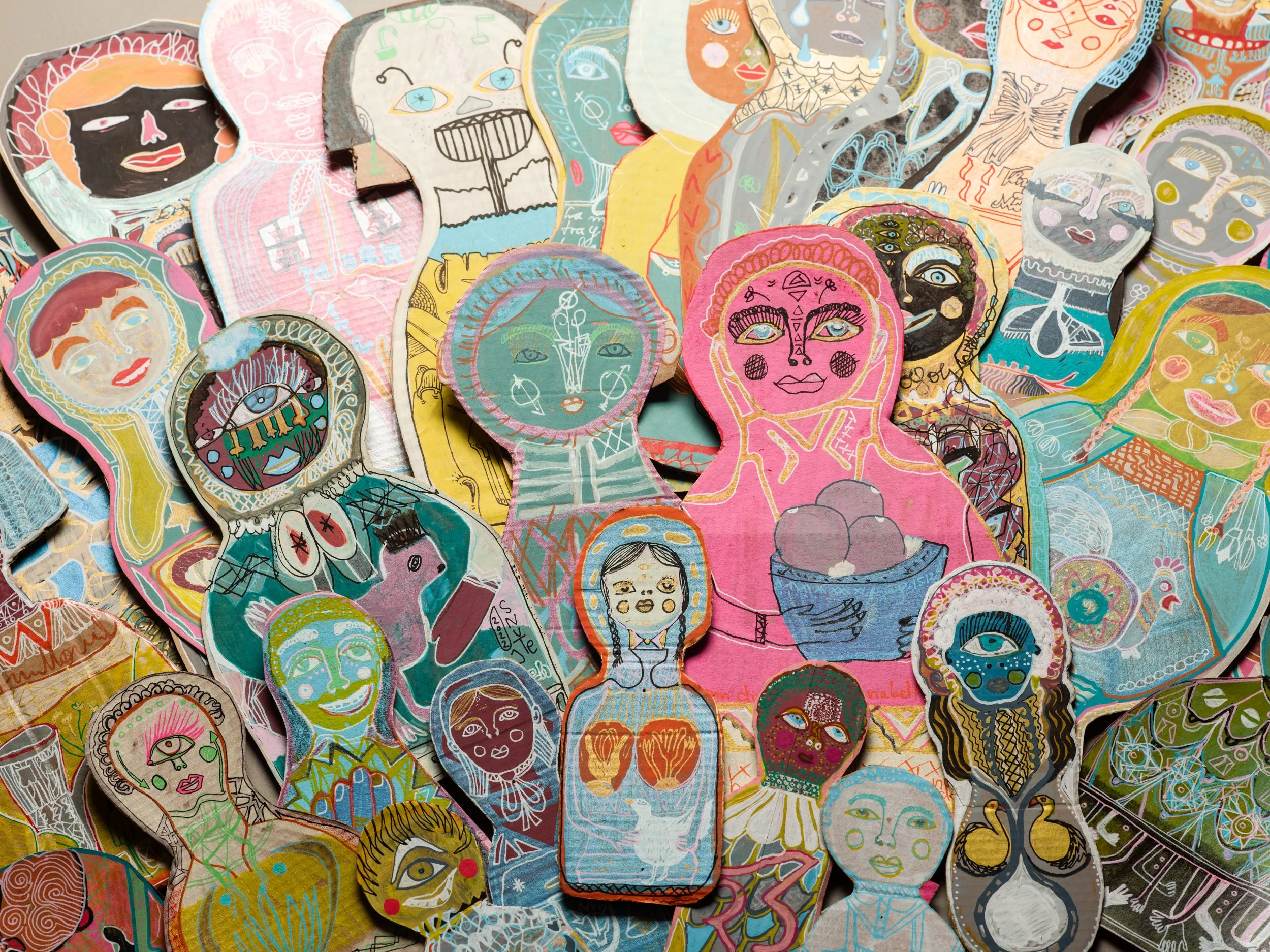
In my artistic practice with the Minimal Art Gallery, I explore contemporary social conditions through interdisciplinary and experimental approaches. My aim is to create spaces—both physical and conceptual—that challenge conventional perspectives and invite active participation. By combining analogue and digital media with do-it-yourself strategies, I expand the possibilities of artistic production and open up new ways of understanding culture, society, and human experience.

“Minimal is the new Maximum”

Camera und Eding: Lucie Freynhagen

Beat produced by: Deacy

Hybrid Paintings: Eine Brücke zwischen Tradition und Technologie

Hybrid Paintings combine traditional artistic techniques with contemporary digital technology. By integrating hand drawings on paper with digital colouring and compositional tools, I am able to experiment with diverse colour palettes and make more flexible creative decisions.

Working in layers allows for a deeper engagement and ongoing development, while each technique used—from the direct mark of a pencil to digital tools—expands my artistic practice.

My works aim to trigger processes of thought, evoke emotional responses, and engage viewers in a dialogue that goes beyond pure aesthetics and reflects the complexity of the present moment.

Eine bunte, abstracte Illustration eines Raumes mit mehreren Figuren, einem Tisch, einem Lampen, einer Blume in einer Vase und einer Schreibmaschine, wobei eine Figur mit Kopf in einem Kleid auf dem Tisch sitzt und eine andere Figur mit einem Zettel und Kopfhörer auf dem Boden liegt.
Eine künstlerische Illustration zweier Frauen, die sich an den Händen halten. Eine trägt ein Krankenschwester-Outfit, mit einem Herz und einem medizinischen Werkzeug an der Kleidung, die andere trägt ein schwarzes Kleid mit den Worten 'SPRiSe'. Beide halten Flaschen mit Herzen und sind verbunden durch Drähte. Der Hintergrund zeigt ein Wandbild mit Bergen und einem Mond. Die Illustration ist bunt und stilisiert.
Ein farbenfrohes, abstraktes Kunstwerk mit surrealen Elementen, darunter eine sitzende nackte Frau, ein großes Handbild, das einen Blumenstrauß hält, und eine Vulkanform mit Gesichtern und Pflanzen. Es gibt auch Vögel am Himmel und verschiedene geometrische Muster.
Ein farbiges, abstraktes Gemälde einer Frau, die auf einem Bett liegt, mit schwarzen und dunkelbraunen Haut, blonden Haaren und Schmuck, in einem Raum mit Dekorationen und Texten, mit einem dunklen Hintergrund und einer Nachtlandschaft mit Mond im Fenster.
Drei bunte, abstrakte Gemälde in einem Kunstraum mit weißen Wänden und Holzboden, beleuchtet von natürlichem Licht durch ein Oberlicht.
Iconic Mamma - Burgunde - Werkentwicklung

Suntje Sagerer

Artist Statement

My artistic practice moves between painting, drawing, object, sculpture, digital media, and a curatorial approach that I understand as an integral part of my work. In 2014, I developed the MAG – Minimal Art Gallery, conceived as a form beyond the classical exhibition: a sculpture that curates, and a curatorial space that is itself sculpture. My work with the Minimal Art Gallery is created in collaboration with other artists; through its integrative exchange, the MAG also understands itself as a social sculpture.

In parallel, I develop series such as Iconic Mammas, which negotiate motherhood, care, and responsibility in a gender-independent sense. In the Hybrid Paintings, I translate analogue drawings into digital painting processes and then return them into a material form as accessible prints. This movement between analogue and digital reflects a continuous interest in working across different layers of reality and exploring their interconnections.

My work operates at the thresholds between individual and collective, between sculptural object and curatorial thinking, between personal experience and iconic form. I understand my practice as an ongoing process—less directed toward a fixed outcome than toward attentiveness to what emerges and asserts itself in each moment.

In parts of my practice, I use AI as a tool for developing ideas and activating unique works. What is decisive for me is its connection to an independent artistic stance: where a convincing transformation arises between physical work and AI-assisted process, I understand AI as an extension of an original artistic idea. At the centre is not the medium itself, but the question of how ideas become experiential in art and are translated into a new form of presence.

Iconic Mamma - Burgunde / Werk Visualisierung Skulptur

Feel free to get in touch with me.

For collaboration inquiries, please use the form below.

I will get back to you as soon as possible.